Category Archives: Books
In which Liz tells Frank about literature.
Liz Tells Frank What Happened In the Mary Russell/Sherlock Holmes Novels (Sorta)
Dear Frank,
 If there’s anything that makes having a crush on a famous actor less futile and sad, it’s having a crush on a fictional character. And yet, since the age of 11, I have been crushing hard on Sherlock Holmes.
Honestly, I don’t understand people who don’t see the attraction, but they’re probably the same crowd who don’t think smart is sexy, and clearly they can all go to hell. Us right-thinking people over here will be appreciating the wide range of Holmesian film, television and literature available to us — and, when we’re in a particularly saucy mood, making jokes about how good the world’s greatest detective would be in bed. (My personal joke tends to involve some variation on “he’d have no trouble detecting my FILL IN THE BLANK HERE.”)
That said, my personal Top 5 Sherlock Holmes depictions are as follows: Read the rest of this entry
Liz Tells Frank What Happened In “Harriet the Spy”
Dear Frank,
 I was surprised when you told me that you’d never read Harriet the Spy, because it’s one of those children’s books that seems so ubiquitous. Maybe that’s a girl thing? I mean, I’ve never read a Hardy Boys novel. Maybe we’re both missing out. (Maybe you more than me, though.)
The titular Harriet M. Welsch, eleven years old, lives with her parents in New York City’s Upper East Side but is largely being raised by her nanny Ole Golly, who encourages her to write and read and think for herself. Harriet’s main passion is for “spying,” which amounts to wandering around her neighborhood and taking notes on the comings and goings of an assortment of relative strangers. She writes down all of her thoughts — harsh and honest and very much what you might expect from an insightful 11-year-old — in a notebook. And that, of course, gets her in trouble.
Well, eventually. First, book-quoting Ole Golly leaves Harriet to get married, shaking up Harriet’s life considerably. And Harriet gets cast as an onion in the school pageant. Harriet pals around with her best friends Scout (the numbers-minded son of an alcoholic writer) and Janey (an aspiring scientist determined to blow up the planet with chemistry). Harriet makes her rounds, scribbling down details from the lives she observes, there are some temper tantrums… This book? PLOT HEAVY.
The big plot twist is when one day, during a game of tag, the other kids in Harriet’s class manage to steal her notebook, reading the secrets within, including Harriet’s blunt thoughts about their personal appearance, behavior, parents and hygiene. Read the rest of this entry
Liz Tells Frank Stuff She Forgot Happened In “Bridget Jones’s Diary”
Dear Frank,
 Let us continue our descent into nostalgia, shall we? Of course, when it comes to today’s topic, you probably have less nostalgia to deal with than I do.
Frank, if you’ve forgotten, Bridget Jones’s Diary is a year in the life of a slightly spacey 30-something lady, who originated in the newspaper columns of Helen Fielding. When given the opportunity to turn her columns into one of the first great examples of the chick-lit genre, Fielding riffed off the plot of Jane Austin’s the BBC’s Pride and Prejudice—
Wait, Frank, because you are not a girl, you may not have watched the BBC Pride and Prejudice mini-series (which was basically the Downton Abbey of its day), so if you’ve forgotten the bare essentials of that story, here they are: Read the rest of this entry
Jeff Tells Liz What Happened In “Modelland”
 Boy oh boy, Liz,
You may recall that when I was recapping Top Model for you, there was a challenge based on Tyra’s new young adult novel Modelland. At the time, I expressed semi-interest in reading Modelland and telling you about it. You took me up on that offer, and purchased me a copy for my brand new Kindle. “No sweat!” I thought. “This’ll be fun!”
Liz, when I wrote the recaps for the Top Model episodes, you and your readers no doubt guessed that I knocked back a few drinks and just wrote the recap as I watched, which saved me time and effort and allowed me to uphold my absolute standards of unprofessionalism. Sadly, I could not take this approach in reviewing Modelland, since rather than being a breezy 45 minutes of stupid reality show, Modelland is an aimless novel for teens that clocks in at a staggering 563 PAGES. THAT IS SO LONG. IT IS TOO LONG. To compare, the Pulitzer-Prize-winning novel A Visit from the Goon Squad is only 340 pages, and that book spanned a time period from the 70’s to the actual FUTURE. So Modelland… pretty long. Too long. Just like these opening paragraphs! Here’s what happened in it! Read the rest of this entry
Liz Tells Frank What Happened In “Batman: The Return of Bruce Wayne”
Dear Frank,
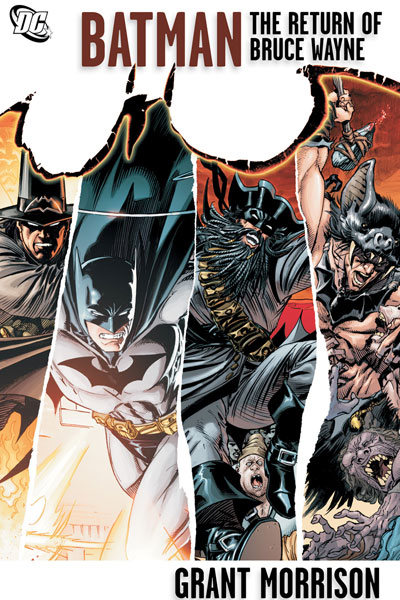 I used to be a big comics fan, buying new issues of certain series monthly and borrowing the rest from friends, with whom I would debate the latest DC and Marvel developments. I did this not as a teenager, but throughout my mid-20s, because that’s how
 much of a late bloomer totally awesome I was.
I still like the medium, still like a good superhero story, still think Batman is totally boneable — alas, it’s been several years since I was reading regularly. However, a month or so ago, my friend Rudy recommended the graphic novel The Return of Bruce Wayne to listeners of our podcast, and as I love time travel and Batman, I requested and received a copy of the trade paperback for Christmas.
The reason for me wanting to read it was two-fold — one, FUCK YEAH BATMAN TRAVELLING THROUGH TIME. Two, I kinda wanted to see if it’d be at all possible for me, a casual reader, to hop into a modern day comic adventure and understand what the hell was going on. Read the rest of this entry
Liz Tells Frank What Happened In the “Castle” Novels Written By Castle
Dear Frank,
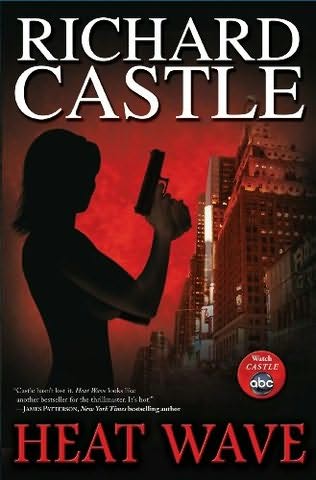 The idea/term/concept “transmedia” is meant to represent the concept of a story told across across multiple platforms — see, as one early example, the sequels to The Matrix, which were accompanied by a video game, comics and other ancillary content. The Matrix sequels suffered from a combination of being ahead of their time and also some supreme dumbness. Today, though, the concept of using multiple platforms to tell a story has become increasingly mainstream. Case in point: A little ol’ TV show called Castle.
As you know, Frank, Castle is an easygoing ABC procedural about a sexy mystery writer named Castle, who rides along with a sexy lady detective named Beckett while she and her detecting team solve crimes. It is the sort of nice little show that my grandmother would have really liked — every week, mysteries get solved, the main characters flirt, Nathan Fillion makes the occasional reference to Firefly and a good time is had by all.
In the context of the show, there are two reasons Castle hangs out with Beckett — one, because of the aforementioned flirting, and two (the “official” reason), his current series of “Nikki Heat” novels is based on her. What is amazing is that those novels? THEY EXIST. They have been written. They are New York Times bestsellers. And they are AWESOME. Read the rest of this entry
 Liz Tells Frank What Happened In...